
Flexible meal logging
Use a photo, a few words, or a check-in. Choose what feels manageable today.
FROM THE MAKERS OF PIPPA · BUILT FOR ADULTS
Recovery happens in everyday moments. Nuro gives you a calm place to log a meal, notice how you feel, and take the next small step—with your care team alongside you.


A gentle view of what’s next, with room for real life.
No calorie counts by default
No streaks to protect
Made for adult life
Connected to your care
A LOOK INSIDE
Simple tools, a little breathing room, and no need to get every day perfect.
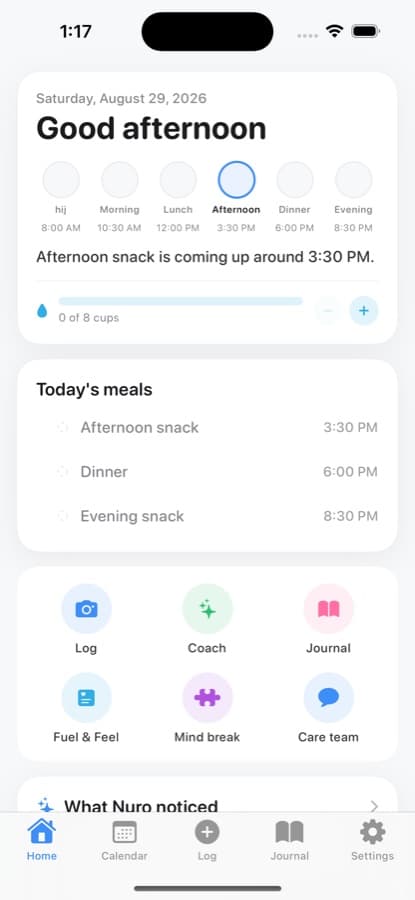
See your meal rhythm and upcoming meals, with shortcuts to the support you need.
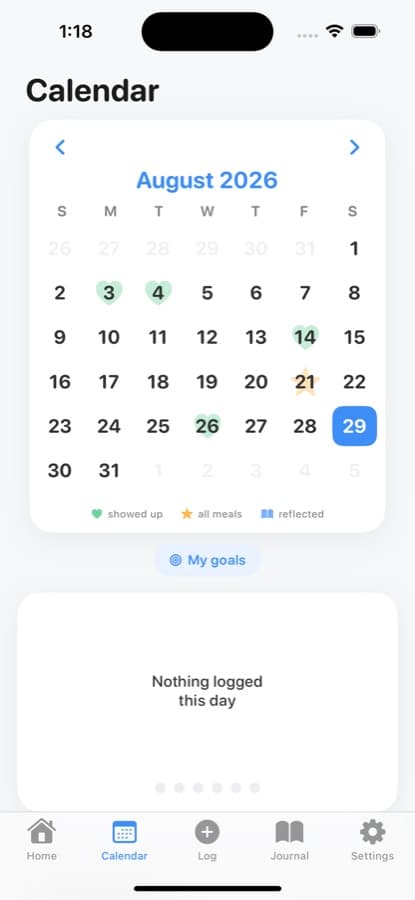
Look back through your calendar and return to a day without rebuilding it from memory.
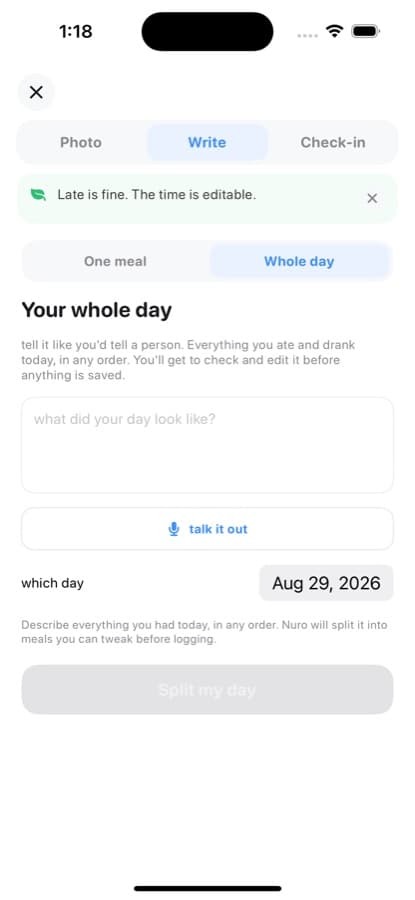
Describe one meal or a whole day. Review and edit before anything is saved.
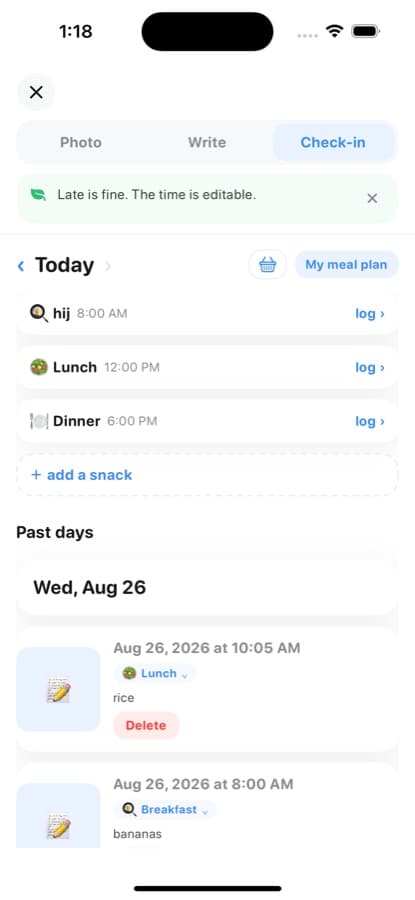
Log a planned meal, add a snack, or catch up on an earlier day. Late is fine.
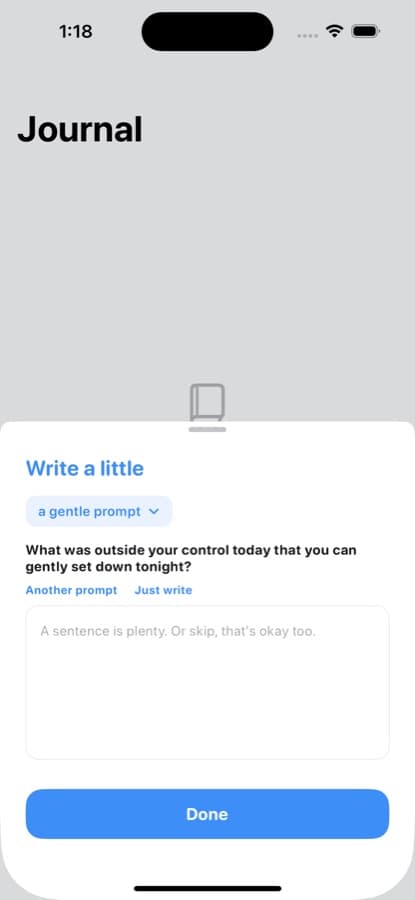
Start with a gentle journal prompt, write freely, or leave it for another day.
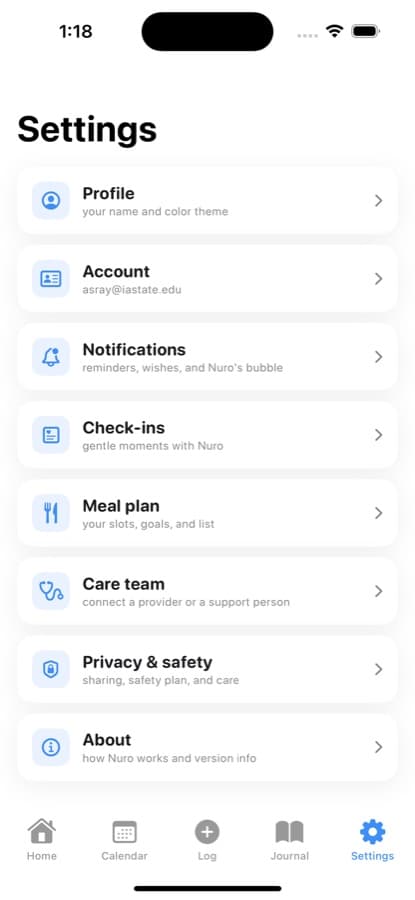
Find your meal plan, reminders, care-team connections, and privacy settings in one place.
Actual iPhone screenshots. The app screens shown are in English; features may vary by version and platform.
LESS ARITHMETIC. MORE EVERYDAY LIFE.
Nuro’s everyday experience focuses on eating rhythm and how you feel, with calorie counts hidden by default. There is no streak to lose when life gets complicated. You can simply come back and begin with the next meal.
Use a photo, a few words, or a check-in. Choose what feels manageable today.
Make space to notice your energy and how eating leaves you feeling.
Find journaling and a mind break alongside your everyday tools.
Keep useful context together so there is more to talk about than what you can remember.
HOW IT WORKS
Set up your meal plan and reminders around your day, with guidance from your clinician when appropriate.
Record a meal and how you feel. A short note is enough, and you can catch up later.
Look back at your calendar, write a little, and bring useful context to your next appointment.
FOR CLINICIANS & CARE TEAMS
Recovery does not pause when an appointment ends. Nuro brings meal logs, check-ins, and care-team connections into the same experience, helping adults stay connected to the work they do with their clinicians.
We welcome input from dietitians, therapists, and people with lived experience as we continue improving Nuro.
ONE FAMILY. DIFFERENT EXPERIENCES.
Pippa brings a playful companion to eating-recovery support. Nuro takes a calmer approach, with everyday rhythms, reflection, and a more understated design. Both put connection with care at the heart of the experience.
PRIVACY & TRUST
Connect with a care team when you choose, and review your sharing settings.
Our privacy policy states that health data is never sold, used for advertising, or used to train AI models.
AI support can make mistakes. Nuro does not provide medical diagnosis or treatment and is not an emergency service.
LEGAL & ACCOUNTABILITY
Recovery support asks for trust. Our policies explain the boundaries: how Nuro handles data, what the app can and cannot do, how to get help, and the terms that apply when a clinic uses Nuro.
What we collect, how we protect it, and the choices you have over your information.
The terms, safety information, age rules, and boundaries for using Nuro.
Our service providers, accessibility commitment, refunds, support, and clinic agreement.
A FEW THINGS TO KNOW
Nuro is designed for adults looking for gentle support with eating recovery and daily routines, including people working with a dietitian or therapist. Discuss whether it fits your needs with your care team.
Use the App Store or Google Play badges on this page to visit Nuro’s store listings. Availability can vary by region and platform. If a listing is not yet accessible, please check back or contact us.
Calorie counts are hidden by default in the everyday experience. Some information may be made available through clinician-guided settings where appropriate for your care.
You can return without protecting a streak. Add a past meal or describe a whole day, review the details, and continue from where you are.
Nuro includes care-team connections in settings. Sharing is optional and requires consent; talk with your clinician about how they want to use it.
No. The coach is AI support, not a qualified clinician. It can make mistakes and should not be used for diagnosis, treatment decisions, or emergencies.
Nuro is designed around adult routines with a calm interface. Pippa offers a more playful companion experience. They share an emphasis on eating-recovery support and care-team connection.
You can read this website in English, Spanish, Simplified Chinese, and French. The screenshots remain in English. Website translations do not confirm app language availability.
Find Nuro in your app store and make room for a gentler daily rhythm. Have a question or an idea? We’d love to hear from you.